
What Is an Intumescent Strip?
In case of a fire outbreak, your first consideration should be ensuring the safe evacuation of the people inside the burning building. However, sometimes fires can spread quickly and hamper people’s evacuation.
The spreading smoke can further complicate the rescue of people trapped in the burning building and hamper firefighting efforts. However, you can take precautions to stop the spread of a fire in your building by installing fire doors and regular fire door inspection.
Unlike conventional doors, a fire door is built to be more resistant to fire. It is also usually fitted with seals around the edges that can halt the spread of fire and smoke to unaffected areas of your building. One of the key components in a fire door is the intumescent strip.
What is an Intumescent Strip?
An intumescent strip is a thin seal usually fixed around the edges of a fire door and door frame. The intumescent strip usually blocks the small spaces between the door and frame through which fire flames can seep and move into unaffected parts of your building.
The intumescent strip around the door expands and blocks any gaps around the door space on exposure to heat from a fire. With the gaps around the door closed, the spread of a fire can be contained, albeit for a while.
Why Should You Install Intumescent Strips on Your Doors?
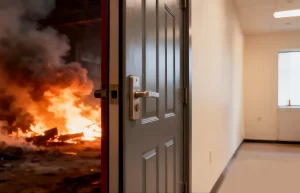
There are several key reasons why you should ensure that your fire doors have intumescent strips, including:
- They help halt the spread of a fire giving you valuable time to carry out a proper evacuation.
- Intumescent strips also help contain the quick spread of smoke from the burning part of the building to other areas. Smoke is a major reason for fatalities in the event of a fire, not to mention that it usually hampers the efforts of firefighters because it decreases visibility.
- By halting the spread of the fire, intumescent strips will give you more time to save your property.
Note that the primary function of intumescent strips on fire doors is to contain the spread of a fire and not the smoke. To prevent smoke from filtering into other parts of your building in the event of a fire, you also need to add smoke seals around your fire door.
What Are the Components Used in Fabricating an Intumescent Seal?
- 1.Graphite (Exfoliating): High-performance seals often use Intercalated Graphite.
Graphite has excellent thermal stability, which makes it an ideal material for use in passive fire protection systems. When exposed to high temperatures, graphite expands and forms a protective layer that can withstand exposure to fire for extended periods. - 2.Fillers: Materials like Sodium silicate or Magnesium Hydroxide
Sodium silicate has excellent fire-resistant properties. When exposed to heat, it swells up and forms a hard, protective layer that can withstand high temperatures for a prolonged period.
Where Should Intumescent Strips Be Fitted?
Intumescent seals are typically fixed into the door frame, but they can also be fitted into grooves along the door.
To determine the most ideal placement of intumescent seals, it is essential to consider your door design.
What Size of Intumescent Strips Should You Use on Your Doors?
As previously mentioned, intumescent fireproof seal help contain the spread of fire but cannot hold back a raging blaze indefinitely. The duration of their effectiveness typically depends on the thickness of the fire-rated material used.
Here is the breakdown of standard sizes based on industry regulations (specifically BS 476 and EN 1634 standards):
1. Standard Size Guide
Most intumescent strips are 4mm thick, but the width varies to accommodate different amounts of chemical expansion.
| Door Fire Rating | Standard Strip Size (Width x Depth) | Configuration |
| FD30 (30 Mins) | 10mm x 4mm or 15mm x 4mm | Single strip centered in the door or frame. |
| FD60 (60 Mins) | 20mm x 4mm or 25mm x 4mm | Single wide strip or two narrower strips side-by-side. |
| FD90 / FD120 | Specific Manufacturer Spec | Usually multiple strips or high-pressure graphite. |
What Is the Difference Between Intumescent seal and Smoke Seals?
It is a common mistake to use these terms interchangeably, but they actually perform two very different jobs. In a fire, smoke kills more people than heat does, so understanding the distinction is vital for life safety.
The simplest way to remember it: Intumescent seals save the building; smoke seals save the people.
