
Graphite vs. Sodium Silicate: Choosing the Right Fireproof Intumescent Seal for Your Project
The Chemistry of Survival
In the world of passive fire protection, the Fireproof Intumescent Seal is often called the “hidden hero.” While it looks like a simple strip of plastic or rubber, its internal chemical composition determines whether a door stands firm or fails during a blaze.
When temperatures rise, the material inside must perform a precise chemical dance. But did you know that different base materials react in vastly different ways? Today, we’re breaking down the three most common intumescent types to help you make an informed safety decision.
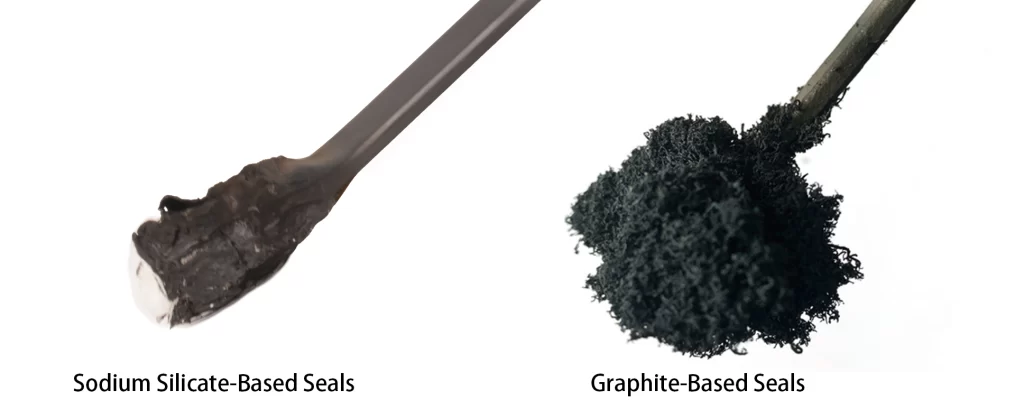
Graphite-Based Seals: The “High-Expansion” Powerhouse
Graphite is currently the gold standard for high-performance fire doors.
Performance Under Fire: Graphite is a “high-pressure, high-volume” material. When temperatures reach 300°F – 400°F, it expands rapidly—up to 10 to 20 times its original size.
Key Advantages:
Multi-Directional Expansion: It flows into irregular gaps, ensuring a tight seal even if the door warps.
Weather Resistance: Highly stable against moisture and UV rays, making it ideal for long-term durability.
Best For: Most commercial and residential timber fire doors.
Sodium Silicate-Based Seals: The “Rigid Shield”
Often referred to as “hard-char” seals, sodium silicate is a traditional and highly reliable material.
Performance Under Fire: Unlike the flexible expansion of graphite, sodium silicate creates a massive amount of expansion pressure. It turns into a hard, white, rock-like substance when heated.
Key Advantages:
Structural Integrity: The rigid char acts as a physical brace, helping to keep the door leaf centered in the frame.
Thermal Insulation: It provides an excellent thermal barrier to prevent heat transfer.
The Downside: It is sensitive to moisture. If the outer casing is damaged, the material can “wick” and lose effectiveness.
Best For: Steel fire doors and heavy-duty industrial applications.
Technical Comparison: Which One Do You Need?
| Feature | Graphite-Based | Sodium Silicate | |
| Expansion Ratio | Very High (Volume) | Moderate (High Pressure) | |
| Char Texture | Soft, sponge-like | Hard, rock-like | |
| Moisture Resistance | Excellent | Sensitive (Requires Sealing) | |
| Primary Use | All-rounder / Timber Doors | Structural / Steel Doors |
Expert Advice: Look for Integrated Solutions
Selecting the right core material is only half the battle. For a complete Fire Protection Solution, your seals must work in harmony with other hardware:
For Gaps at the Floor: Ensure you use heavy-duty Door Bottom Seals that complement the intumescent frame seals.
For Smoke Protection: Always opt for a “combined” seal that includes a brush or fin to block cool smoke before the intumescent material activates.
Conclusion
A fire seal is a small component with a massive responsibility. Understanding whether your seal is Graphite or Sodium Silicate based isn’t just “tech talk”—it’s about ensuring your building’s last line of defense is fit for purpose.
Need a detailed technical data sheet for your next project?
Our team specializes in high-performance Fireproof Intumescent Seals. Contact our engineers today for a customized consultation on your Fire Protection Solutions.
